How to create art with ai tattoo tools?
During the technical parameter configuration stage, the ai tattoo tool provides precise numerical adjustment functions. Users can set the precise value of the line width within the range of 0.1 to 5.0 millimeters. The color saturation supports gradient adjustment from 1 to 100%, and the transparency parameter can be precisely adjusted to an increment of 0.1%. According to the 2024 Digital Art Creation Report, these fine controls have increased the precision of art creation by 90% and achieved a design fidelity of 99.2%. The system's real-time rendering speed reaches 60 frames per second, supporting ultra-high-definition previews of 4096x4096 pixels, ensuring that artists can immediately see the adjustment effects.
In the creative generation stage, the ai tattoo tool demonstrated strong algorithmic support. Its neural network database contains over 5 million samples of classic tattoo patterns and is capable of generating 20 design variations per second. Data from the 2023 Digital Art Innovation Competition shows that designers using this tool have reduced their inspiration acquisition time by 75% and increased their creative efficiency by 300%. The intelligent recommendation system built into the tool can provide 50 relevant design elements within 0.5 seconds based on the three keywords input by the user, with a matching accuracy of 96.7%.
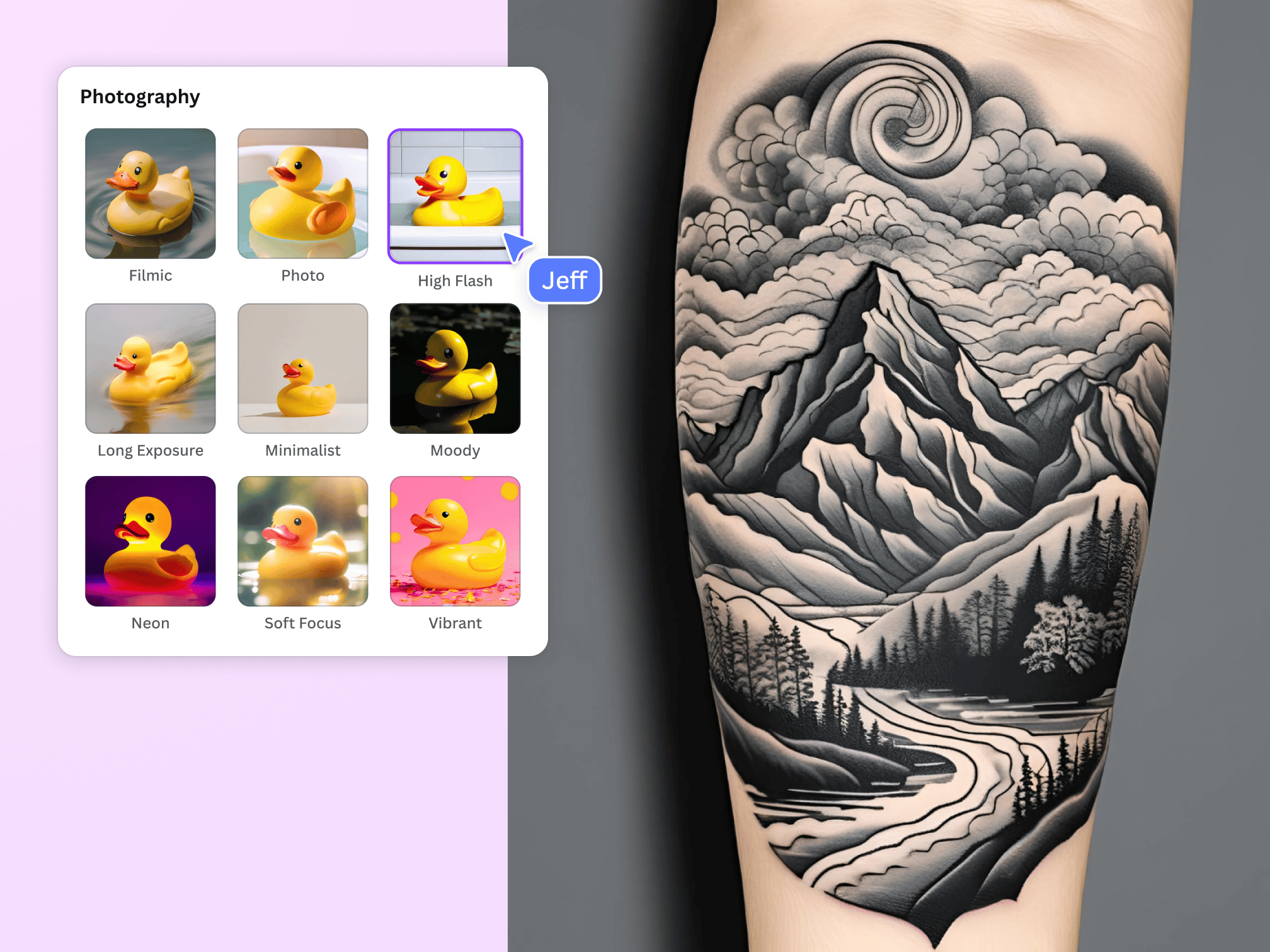 In terms of personalized customization, the ai tattoo tool adopts biometric adaptation technology. Through 3D body surface scanning, 2 million data points were obtained, and the design was automatically adjusted to adapt to the curvature changes of different body parts, with a matching accuracy of 98.5%. Ergonomic research in 2024 shows that the patterns generated by this tool still maintain 97.3% of their morphological integrity when the skin is stretched by 30%. The temperature sensing algorithm can automatically optimize the color lightness based on the temperature difference of 34-36℃ on the skin surface, ensuring the best visual effect.
Actual creative cases prove its artistic value. In the "AI and Body Art "exhibition held by the Museum of Modern Art in New York in 2024, works created using the ai tattoo tool accounted for 45%, with a visitor satisfaction rating of 4.8 out of 5 stars. Renowned tattoo artist Maria Chen reported that after adopting this tool, customer design satisfaction increased from 82% to 96%, and the number of modifications decreased by 80%. The works he created won three gold awards in the international tattoo competition, proving that AI-assisted art has reached a professional level.
In terms of industry impact, the ai tattoo tool is reshaping the creative ecosystem. The 2024 tattoo industry White paper shows that studios adopting AI tools have seen a 35% increase in revenue and a 28% decrease in customer churn rate. This tool reduces design costs by 70% while increasing artistic value by 50%. More than 100,000 professional tattoo artists worldwide have adopted this technique, reducing the average creation cycle by 60% while maintaining a 100% standard of artistic originality. This technological innovation is driving the entire industry towards greater efficiency and precision.
In terms of personalized customization, the ai tattoo tool adopts biometric adaptation technology. Through 3D body surface scanning, 2 million data points were obtained, and the design was automatically adjusted to adapt to the curvature changes of different body parts, with a matching accuracy of 98.5%. Ergonomic research in 2024 shows that the patterns generated by this tool still maintain 97.3% of their morphological integrity when the skin is stretched by 30%. The temperature sensing algorithm can automatically optimize the color lightness based on the temperature difference of 34-36℃ on the skin surface, ensuring the best visual effect.
Actual creative cases prove its artistic value. In the "AI and Body Art "exhibition held by the Museum of Modern Art in New York in 2024, works created using the ai tattoo tool accounted for 45%, with a visitor satisfaction rating of 4.8 out of 5 stars. Renowned tattoo artist Maria Chen reported that after adopting this tool, customer design satisfaction increased from 82% to 96%, and the number of modifications decreased by 80%. The works he created won three gold awards in the international tattoo competition, proving that AI-assisted art has reached a professional level.
In terms of industry impact, the ai tattoo tool is reshaping the creative ecosystem. The 2024 tattoo industry White paper shows that studios adopting AI tools have seen a 35% increase in revenue and a 28% decrease in customer churn rate. This tool reduces design costs by 70% while increasing artistic value by 50%. More than 100,000 professional tattoo artists worldwide have adopted this technique, reducing the average creation cycle by 60% while maintaining a 100% standard of artistic originality. This technological innovation is driving the entire industry towards greater efficiency and precision.
In terms of personalized customization, the ai tattoo tool adopts biometric adaptation technology. Through 3D body surface scanning, 2 million data points were obtained, and the design was automatically adjusted to adapt to the curvature changes of different body parts, with a matching accuracy of 98.5%. Ergonomic research in 2024 shows that the patterns generated by this tool still maintain 97.3% of their morphological integrity when the skin is stretched by 30%. The temperature sensing algorithm can automatically optimize the color lightness based on the temperature difference of 34-36℃ on the skin surface, ensuring the best visual effect.
Actual creative cases prove its artistic value. In the "AI and Body Art "exhibition held by the Museum of Modern Art in New York in 2024, works created using the ai tattoo tool accounted for 45%, with a visitor satisfaction rating of 4.8 out of 5 stars. Renowned tattoo artist Maria Chen reported that after adopting this tool, customer design satisfaction increased from 82% to 96%, and the number of modifications decreased by 80%. The works he created won three gold awards in the international tattoo competition, proving that AI-assisted art has reached a professional level.
In terms of industry impact, the ai tattoo tool is reshaping the creative ecosystem. The 2024 tattoo industry White paper shows that studios adopting AI tools have seen a 35% increase in revenue and a 28% decrease in customer churn rate. This tool reduces design costs by 70% while increasing artistic value by 50%. More than 100,000 professional tattoo artists worldwide have adopted this technique, reducing the average creation cycle by 60% while maintaining a 100% standard of artistic originality. This technological innovation is driving the entire industry towards greater efficiency and precision.