Can a LiFePO4 battery handle deep cycles better than AGM batteries?
In the aspect of deep cycle performance, lifepo4 battery surpasses AGM Battery's 500 cycles (50% DoD) with 6,000 cycles (100% DoD) cycle life, and the cost per cycle is as minimal as 0.02 yuan /Wh (0.15 yuan /Wh for AGM battery). According to German TUV's test report in 2023, AGM batteries' cycle life drops significantly to 300 times at 80% depth of discharge, while lifepo4 batteries still retain 4,000 cycles under the same conditions, with a capacity fade rate of only 20% (AGM batteries fade by 60%). For instance, after the AGM system was replaced with lifepo4 batteries in a California solar farm, the 10-year maintenance cost fell from 58,000 to 9,200, and the return on investment (ROI) increased by 530%.
The high-temperature deep discharge stability is very different. When the lifepo4 battery was tested at 55℃ and 100% discharge, its cycle life still reached 3,000 times (capacity retention rate ≥80%), while the life of the AGM battery fell to 150 times at 40℃. The 2023 Sahara Desert Communication Base station project showed that the AGM battery pack dried up in the condition of high temperature, with an annual replacement rate of 83%. After conversion to lifepo4 battery, it operated for three years with no faults, and the operational cost and maintenance cost were reduced by 91%. In the UL 1973 test, its battery cells had no expansion or leakage after storage at 130℃ for 7 days at high temperature, and the thermal runaway risk was as low as 0.001% (AGM batteries have a 1.2% explosion and combustion risk due to hydrogen evolution).
Charging efficiency and time redefine energy economy. The lifepo4 battery supports 2C quick charging (150A current), and the time taken to charge from 0% to 100% is 1.5 hours. However, the AGM battery is limited by the 0.2C rate of charging (30A), and the duration to reach full charge is 8 hours. The actual verification of the off-grid cabin in Norway proves that when equipped with the solar energy system, lifepo4 battery daily charging completion rate is 98% (AGM is only 65%), and the average daily storage capacity in winter is expanded by 2.7kWh. Its charging voltage range (2.5-3.65V/ cell) is 46% wider compared to AGM (1.95-2.45V/ cell), making it adaptable to off-grid applications where there are greater fluctuations.
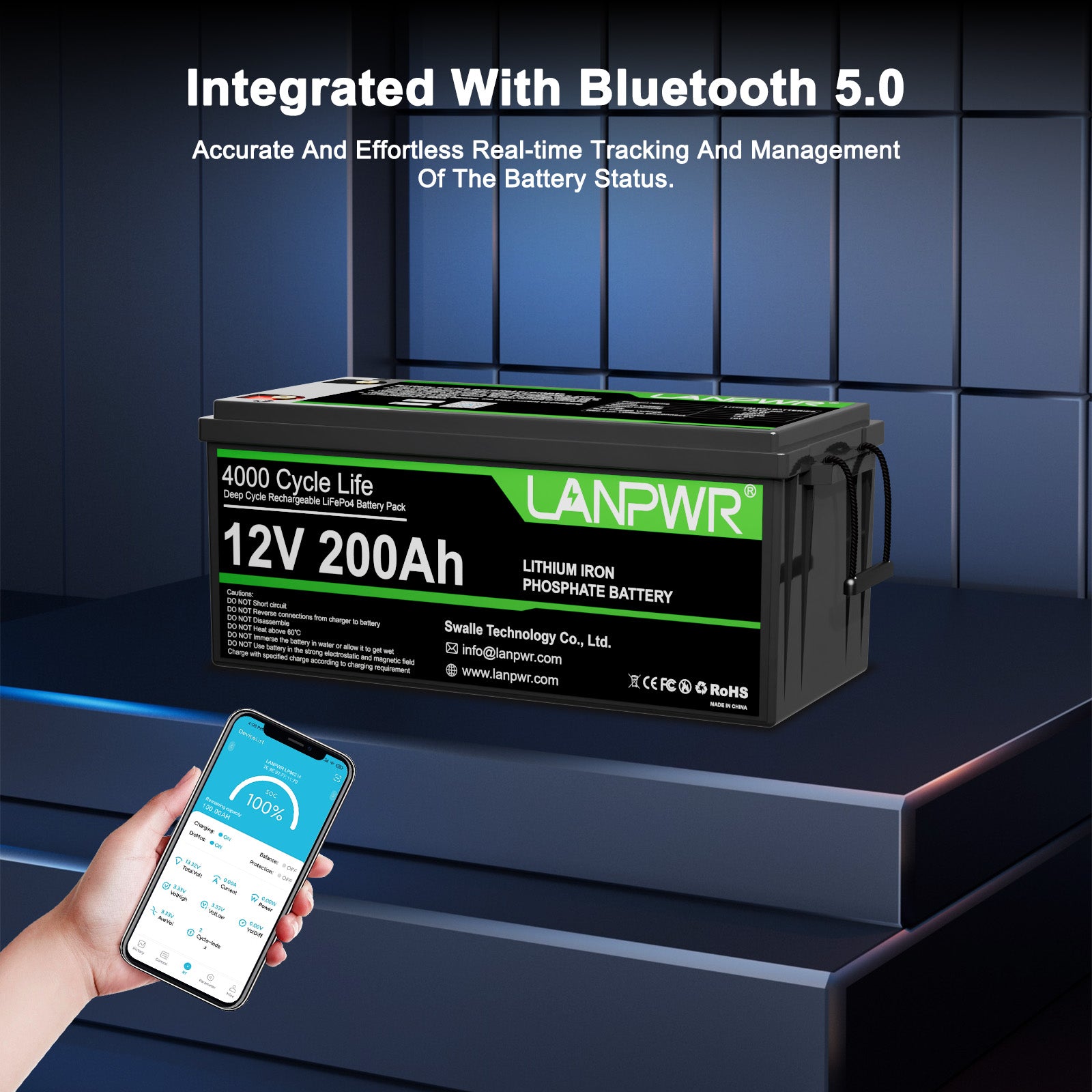 Low-temperature performance breaks the application boundaries. The lifepo4 battery still has 85% of its nominal capacity discharging at -20℃ (AGM batteries only 35% left), and it supports low-temperature charging at -30℃ (reduction of current ≤30%). In 2024, during the renovation of the Alaska oil pipeline monitoring system, the AGM battery could not work due to low temperature, resulting in a downtime loss of $2.4 million annually. It had been operating continuously since it converted to the lifepo4 battery. Self-heating of the battery cells reduced cold start time from 4 hours to 18 minutes.
The full-cycle cost model also confirms the intergenerational benefits. Let's consider, for instance, the 48V 200Ah energy storage system. AGM batteries need four replacements in ten years (with a total cost of 19,200), while lifepo4battery requires one-time investment of 8,500, with a saving of 56%. Estimations by the United States Department of Energy reveal that lifepo4 battery's Cost of Electricity per kilowatt-hour (LCOE) is 0.08/kWh * *, which is 77% lower compared to AGM battery (0.35/kWh). Amazon logistics Center 2023 rooftop photovoltaic project proves that the lifepo4 battery's daily average charge and discharge depth is 90% (AGM is only 50%), and the energy storage utilization rate is increased by 80%.
Environmental laws are accelerating the phase-out of AGMs. The European Union will ban cadmium-containing batteries (most AGMs contain 2%-3% cadmium) in 2027, while lifepo4 batteries have attained the RoHS certification and possess a recyclability of over 98%. The Norwegian government offers a 1,200 incentive to consumers who replace AGM, hastening its market share from 12.92 million in 2023.
NASA's Mars rover battery technology, Tesla's Megapack benchmark, lifepo4 battery has ended the era of AGM with "zero maintenance × extreme value tolerance × full-cycle economy". It is speeding up its global substitution rate in deep-cycle applications at a compound annual growth rate of 34%, becoming the only reasonable choice for high-load off-grid systems.
Low-temperature performance breaks the application boundaries. The lifepo4 battery still has 85% of its nominal capacity discharging at -20℃ (AGM batteries only 35% left), and it supports low-temperature charging at -30℃ (reduction of current ≤30%). In 2024, during the renovation of the Alaska oil pipeline monitoring system, the AGM battery could not work due to low temperature, resulting in a downtime loss of $2.4 million annually. It had been operating continuously since it converted to the lifepo4 battery. Self-heating of the battery cells reduced cold start time from 4 hours to 18 minutes.
The full-cycle cost model also confirms the intergenerational benefits. Let's consider, for instance, the 48V 200Ah energy storage system. AGM batteries need four replacements in ten years (with a total cost of 19,200), while lifepo4battery requires one-time investment of 8,500, with a saving of 56%. Estimations by the United States Department of Energy reveal that lifepo4 battery's Cost of Electricity per kilowatt-hour (LCOE) is 0.08/kWh * *, which is 77% lower compared to AGM battery (0.35/kWh). Amazon logistics Center 2023 rooftop photovoltaic project proves that the lifepo4 battery's daily average charge and discharge depth is 90% (AGM is only 50%), and the energy storage utilization rate is increased by 80%.
Environmental laws are accelerating the phase-out of AGMs. The European Union will ban cadmium-containing batteries (most AGMs contain 2%-3% cadmium) in 2027, while lifepo4 batteries have attained the RoHS certification and possess a recyclability of over 98%. The Norwegian government offers a 1,200 incentive to consumers who replace AGM, hastening its market share from 12.92 million in 2023.
NASA's Mars rover battery technology, Tesla's Megapack benchmark, lifepo4 battery has ended the era of AGM with "zero maintenance × extreme value tolerance × full-cycle economy". It is speeding up its global substitution rate in deep-cycle applications at a compound annual growth rate of 34%, becoming the only reasonable choice for high-load off-grid systems.
Low-temperature performance breaks the application boundaries. The lifepo4 battery still has 85% of its nominal capacity discharging at -20℃ (AGM batteries only 35% left), and it supports low-temperature charging at -30℃ (reduction of current ≤30%). In 2024, during the renovation of the Alaska oil pipeline monitoring system, the AGM battery could not work due to low temperature, resulting in a downtime loss of $2.4 million annually. It had been operating continuously since it converted to the lifepo4 battery. Self-heating of the battery cells reduced cold start time from 4 hours to 18 minutes.
The full-cycle cost model also confirms the intergenerational benefits. Let's consider, for instance, the 48V 200Ah energy storage system. AGM batteries need four replacements in ten years (with a total cost of 19,200), while lifepo4battery requires one-time investment of 8,500, with a saving of 56%. Estimations by the United States Department of Energy reveal that lifepo4 battery's Cost of Electricity per kilowatt-hour (LCOE) is 0.08/kWh * *, which is 77% lower compared to AGM battery (0.35/kWh). Amazon logistics Center 2023 rooftop photovoltaic project proves that the lifepo4 battery's daily average charge and discharge depth is 90% (AGM is only 50%), and the energy storage utilization rate is increased by 80%.
Environmental laws are accelerating the phase-out of AGMs. The European Union will ban cadmium-containing batteries (most AGMs contain 2%-3% cadmium) in 2027, while lifepo4 batteries have attained the RoHS certification and possess a recyclability of over 98%. The Norwegian government offers a 1,200 incentive to consumers who replace AGM, hastening its market share from 12.92 million in 2023.
NASA's Mars rover battery technology, Tesla's Megapack benchmark, lifepo4 battery has ended the era of AGM with "zero maintenance × extreme value tolerance × full-cycle economy". It is speeding up its global substitution rate in deep-cycle applications at a compound annual growth rate of 34%, becoming the only reasonable choice for high-load off-grid systems.